OpenAI Agent Builder Shuts Down Nov 30: How to Migrate in Time
OpenAI is retiring Agent Builder on November 30, 2026. Here is what changes, the migration paths that actually work, and a four-week plan to move your agent workflows before the deadline.
Overview
OpenAI is shutting down Agent Builder on November 30, 2026. The visual canvas launched as part of AgentKit in October 2025 will stop working on that date, and OpenAI says the Evals product is being wound down on the same timeline. ChatKit, the embeddable chat interface, stays available.
The notice first went up on June 3, 2026, so many teams have known for months. In practice, a lot of small agent workflows were built quickly by one person, embedded on a website through ChatKit, and then forgotten. If one of those is answering customers or staff today, it has less than four weeks left.
This note covers what is actually changing, the two migration paths OpenAI recommends, a third option worth considering, and a short plan you can run this month.
A visual builder made agents easy to start. The shutdown is a reminder that the workflow logic should live somewhere you control.
What is changing on November 30
From OpenAI's own documentation:
- Agent Builder is deprecated. Existing users can keep using it during the transition window, and it is scheduled to shut down on November 30, 2026.
- Evals is being wound down on the same date, according to the update added to the original AgentKit announcement.
- ChatKit remains available. Hosted ChatKit embeds that point to an Agent Builder workflow ID can keep running only during the transition window. For new work, OpenAI points you to a self-hosted ChatKit server backed by your own agent code.
The practical risk is simple: any chat widget or internal tool that passes an Agent Builder workflow ID will lose the workflow behind it.
The two paths OpenAI recommends
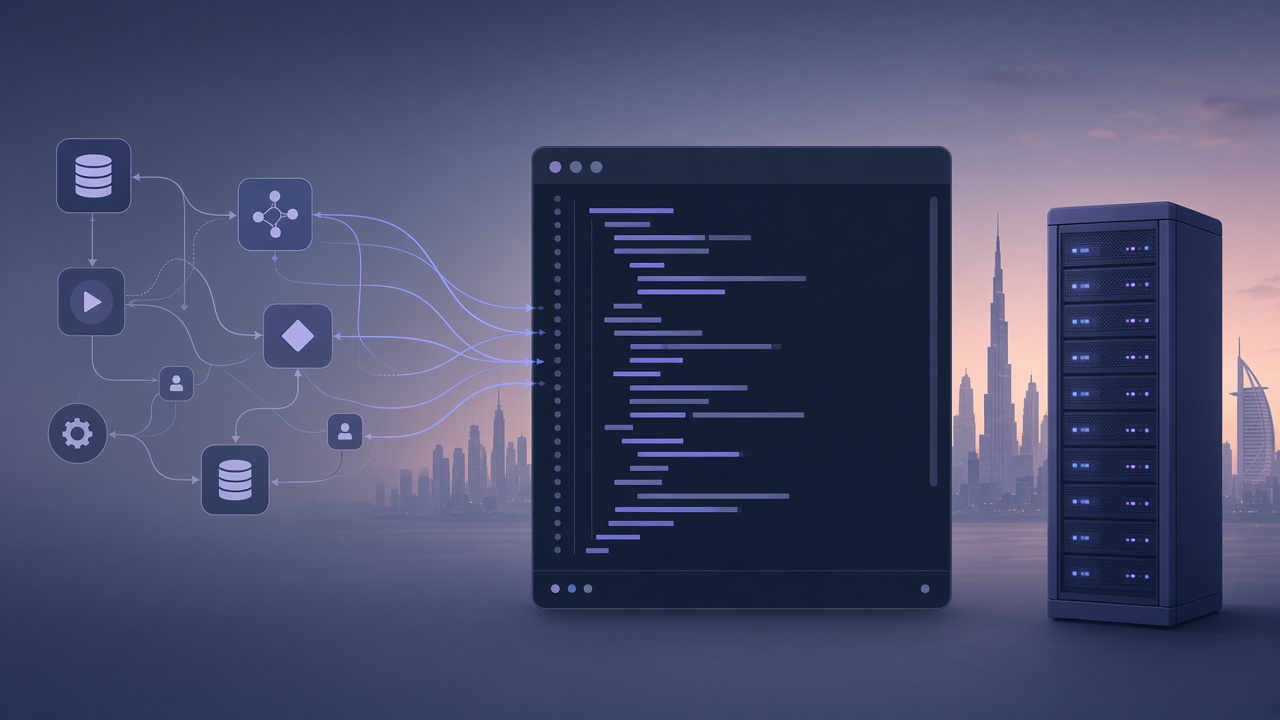
OpenAI's migration guide starts with the same step for both paths. Open the workflow in Agent Builder, select Code, choose Agents SDK, pick Python or TypeScript, and copy the full export. Do this now for every workflow, even ones you plan to retire, because the export is your only record of the logic once the canvas is gone.
Path 1: Agents SDK in your own application
You paste the export into a real codebase, install the matching Agents SDK, and run it on your own infrastructure. If you used ChatKit on the front end, you then stand up a ChatKit server that calls your agent instead of the hosted workflow.
This is the right path when the agent is part of a product, talks to your own database or APIs, or needs custom authentication, logging or data residency.
Path 2: ChatGPT Workspace Agents
If your team is on ChatGPT Business, Enterprise or Edu, you can paste the exported code into the workspace agent builder and ask it to convert the workflow into an agent. OpenAI is clear that this suits natural language use cases, and that workflows with strong determinism at their core may not migrate faithfully.
This fits internal helpers used by staff inside ChatGPT. It does not fit a customer-facing widget on your website.
A caution on the export
OpenAI's guide says the process does not convert your workflow graph and does not guarantee that every behavior transfers unchanged. Branches, guardrails, triggers, tool permissions and connected apps all need a manual review. Treat the export as a first draft, not a finished migration.
A third option: move the workflow to an orchestration layer
Some Agent Builder flows were really workflows with one or two model calls inside them: classify a message, look something up, write a reply, hand off to a human. For those, a workflow tool such as n8n can be a better home than either path above, because the deterministic steps stay deterministic and the model is only used where judgment is needed. We covered that split in n8n Agents vs Workflows.
One timing note if you go this way: n8n released the 3.0 beta on October 27, 2026 and plans the stable release for early December. It removes several legacy nodes, and self-hosted installs now need Docker. Build new flows on the latest 2.x, check the Migration Report, and plan the 3.0 upgrade separately.
| Workflow type | Best new home | Why |
|---|---|---|
| Customer chat on your website or app | Agents SDK plus self-hosted ChatKit | Full control of auth, data and UI |
| Internal helper used by staff in ChatGPT | ChatGPT Workspace Agents | No code to host, shared inside the workspace |
| Mostly fixed steps with a few AI calls | n8n or similar orchestration | Predictable runs, easy retries, clear logs |
| Product feature with tools and memory | Agents SDK or a custom agent stack | Testable code, versioned with the product |
A four-week migration plan
- Inventory this week. List every Agent Builder workflow, its owner, where it is embedded, and which tools or data it touches. Search your front-end code for the workflow IDs passed to ChatKit.
- Export everything. Copy the Agents SDK export for each workflow into version control, along with screenshots of the canvas and the prompt text. Do it before you decide what to keep.
- Pick a path per workflow. Use the table above. Retire anything nobody can name an owner for.
- Rebuild and compare. Run the new version side by side with the old one on real past inputs. Check refusals, handoffs and tool calls, not only the happy path.
- Replace your evals. If you relied on OpenAI Evals, move your test cases into your own test suite or another eval tool now, since that product goes on the same date.
- Cut over before the deadline. Switch the embed or integration, keep the old workflow live as a fallback until it shuts down, and watch logs closely for the first week.
When this fits us
At NTechnologies we build agents as code from the start, with tools exposed over MCP, logging the operator can read, and a clear handoff to a human. That is the same approach behind AgentsCreator, our platform for building and running business agents.
If you have Agent Builder workflows that need a new home before November 30, or you want a second opinion on which path fits, see our AI integration services or contact us with a list of your workflows. We will tell you which ones are worth rebuilding and which ones can go.
Sources
Topics
Build this into a product
Talk to NTechnologies about applying these ideas in your stack.